


.svg)


Why Scaling Startups Don’t Need More Tools — They Need Better Architecture

Scaling a startup feels exhilarating. Customers are growing, new features are shipping, investors are leaning in. But then something shifts. Instead of accelerating, everything slows down. Reports don’t match. Customer data lives in five different places. Sales, marketing, and finance can’t agree on a single version of the truth.
In the early stages, startups often focus on rapid development and building a minimum viable product. However, foundational architectural decisions made at the very beginning can have long-term consequences for scaling and future development.
Most founders panic and do what seems logical: buy more tools. New CRM add-on. Another dashboard. Fresh billing platform. It feels like progress. But it isn’t. More tools don’t fix the problem — they multiply it.
The truth is simple: scaling startups don’t fail because they lack tools. They fail because they lack architecture. Overlooking critical architectural decisions during the early stages of development can lead to costly rework and technical debt as the startup grows.
The Myth of “More Tools = More Growth”
The SaaS world sells a seductive idea: if there’s a gap in your workflow, there must be a product to fix it. And in isolation, many tools work as promised. But when you stack them without a plan, you don’t get efficiency — you get chaos.
The signs of tool sprawl are easy to recognize:
- Teams copying and pasting data between systems
- Conflicting reports from different departments
- Subscriptions piling up with low adoption
- Manual workarounds that drain more time than they save
- Inefficient processes and fragmented business operations make it harder to manage costs as your company grows
Instead of moving faster, your company slows down under the weight of disconnected systems. Growth feels harder, not easier.
A lack of streamlined processes and optimized business operations can make it difficult to manage costs during scaling.
The Real Bottleneck: Architecture, Not Tools
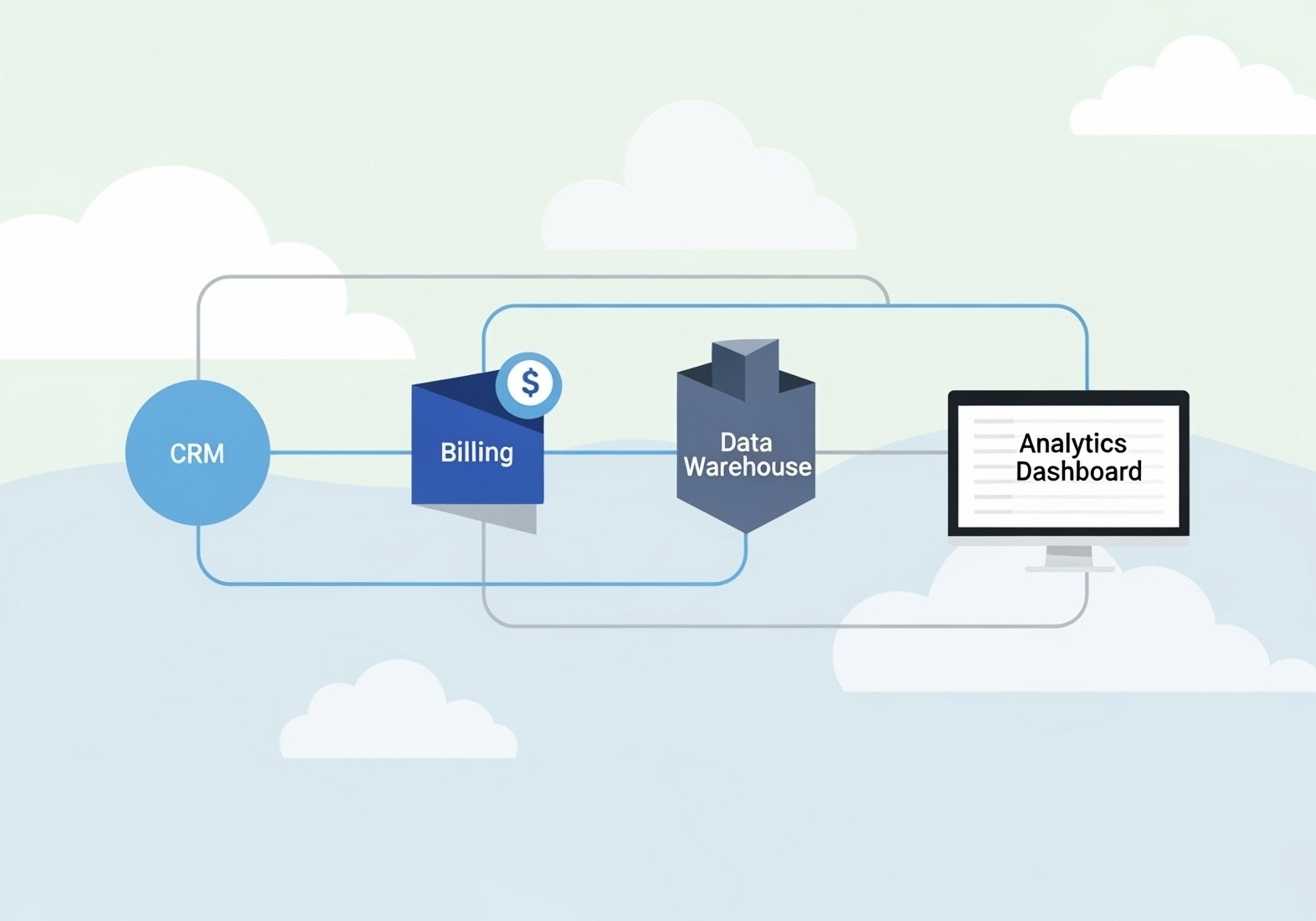
When growth stalls, the real issue isn’t which software you’ve chosen — it’s how the pieces fit together. Without a clear systems architecture, every tool becomes an isolated island.
Think of your startup like a city. Adding more buildings doesn’t work if there are no roads, no water supply, no power grid. Architecture is the infrastructure that connects everything, makes it usable, and allows the city to grow. Startups need the same: a foundation where tools talk to each other, data flows smoothly, and decisions can be made on real information. A scalable architecture ensures that both your product and service can efficiently grow as you optimize and connect resources from the start, preventing costly rework and supporting long-term scalability.
What “Better Architecture” Looks Like
Better architecture isn’t about buying the newest SaaS product. It’s about designing systems that scale with your business. Startups on a high growth scaling journey must adapt their architecture to changing market conditions and incorporate lessons learned from similar challenges faced by others. Four principles guide this:
1. Integration-First MindsetDon’t choose tools based only on features. Choose them based on how well they connect. APIs, workflows, and data sharing matter more than shiny dashboards.
2. Clear Data ModelScattered spreadsheets and duplicated fields kill alignment. A single source of truth lets every team work from the same numbers. Decisions are faster, trust is higher.
3. Scalable WorkflowsProcesses should be designed for tomorrow’s scale, not just today’s workload. That means fewer manual patches, more automated, repeatable steps that can handle 10x growth. Achieving product market fit and market fit is essential before scaling workflows to reach broader market segments.
4. Automation with IntentionNot everything needs to be automated. The goal is to free teams from repetitive, error-prone work so they can focus on what drives growth. Automation strategies should be flexible to accommodate market changes and reflect lessons learned during the scaling journey.
This mindset shifts the conversation from “Which tools should we buy?” to “How do we design systems that grow with us?”
The Payoff: Scaling Without Chaos
Startups that invest in architecture instead of more tools see the difference immediately:
- Faster decisions – Leaders trust the reports because they all come from one source.
- Happier teams – Less manual admin, more time spent on meaningful work.
- Lower costs – Start ups benefit from reducing operational cost by eliminating redundant tools and optimizing resource allocation, leading to more efficient scaling.
- Sustainable growth – Workflows and systems that scale smoothly instead of breaking under pressure.
This is how you scale without chaos — by building a foundation that can actually handle growth.
Conclusion
The biggest mistake scaling startups make is believing growth comes from buying more software. But tools alone can’t fix broken foundations. What startups need is better architecture: systems that are connected, data that is unified, workflows that are scalable, and automation that is intentional.
At Rev.Vision, we help founders and operators design business systems that let them scale without chaos. Because the future doesn’t belong to the startups with the most tools. It belongs to those with the best architecture.

